Background and Purpose:Cryptococcus neoformans is an important opportunistic fungus that causes severe infections, including cryptococcal meningitis, especially in immunocompromised patients. One of its key characteristics is the ability to produce melanin from melanin precursors. This pigmentation serves as a useful marker to distinguish fungus colonies from other yeasts when grown on selective media, such as bird seed agar (BSA). However, the complicated preparation of medium and high cost of commercial BSA restrict its routine application. This study aimed to present and assess a new culture medium prepared from black seed (Nigella sativa) meal extract (NSME) as an affordable and more accessible alternative to BSA for the identification of C. neoformans. Materials and Methods: Various NSME-based media formulations, with and without N. sativa oil (NSO), were prepared and tested against type strains, clinical and environmental isolates of Cryptococcus species, and other medically relevant yeasts. Growth rate and melanin-associated pigmentation of the yeast colonies were assessed during 14 days of incubation. Results: TheNSME media effectively promoted the growth and melanin production of C. neoformans with colony pigmentation ranging from light to dark brown depending on NSME concentration. In contrast, NSO had minimal impact on growth or pigmentation. Addition of 1% glucose to newly developed media enhanced growth rates, aligning colony sizes with those observed on Sabouraud dextrose agar. Non-melanin producer yeasts, such as Candida spp. and Saccharomyces cerevisiae, showed limited growth and no pigmentation, facilitating species differentiation. Conclusion: TheNSME-based culture media offer a reliable, low-cost alternative for the growth and preliminary identification of C. neoformans, with promising potential for use in routine diagnostics, especially in low-resource settings.
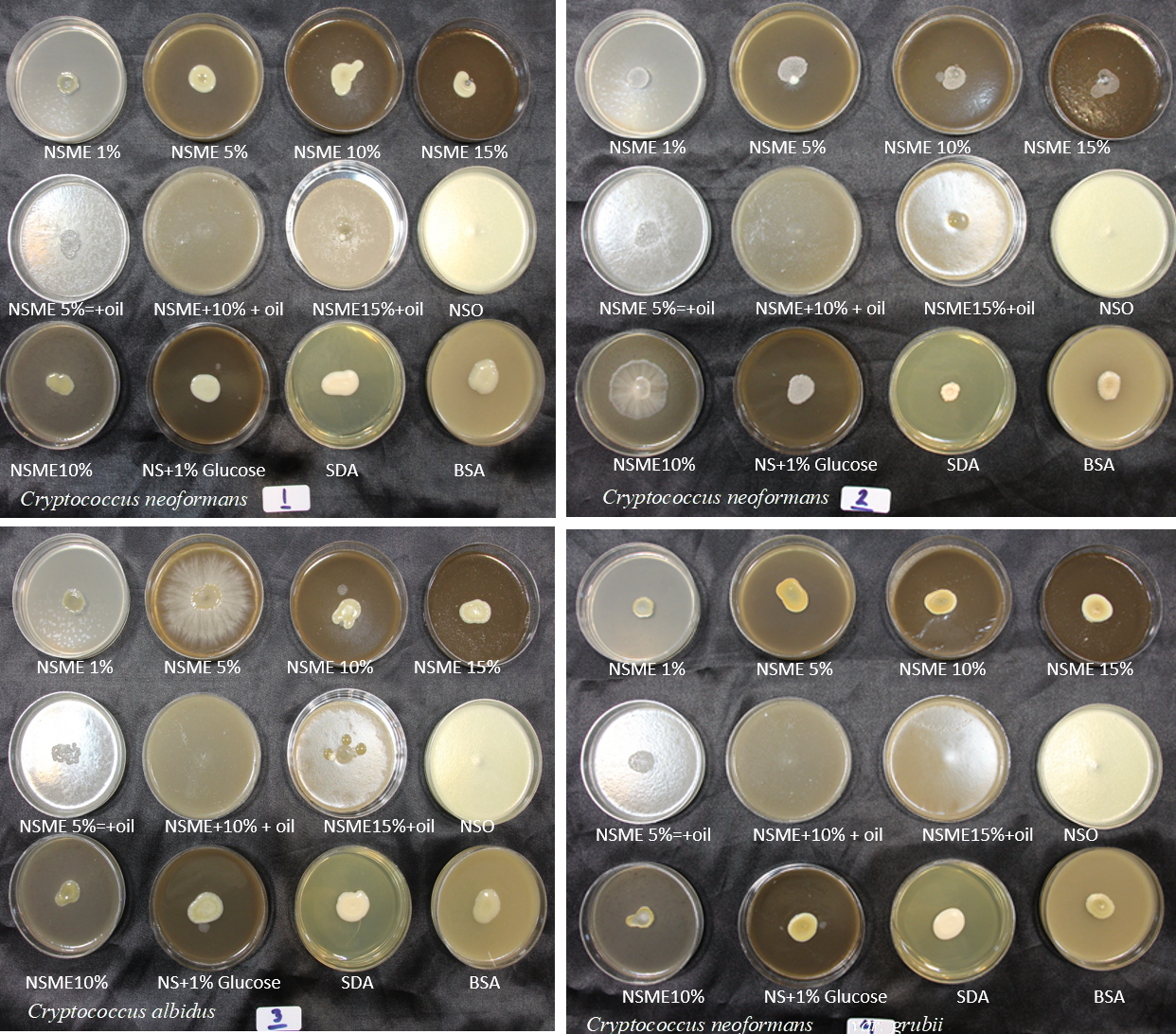
Figure S1. Phenotypic characteristics of yeasts grown on different formulations of Nigella sativa-based media, Sabouraud dextrose agar (SDA), and Bird seed agar (BSA) after 7 days of incubation at 30°C.
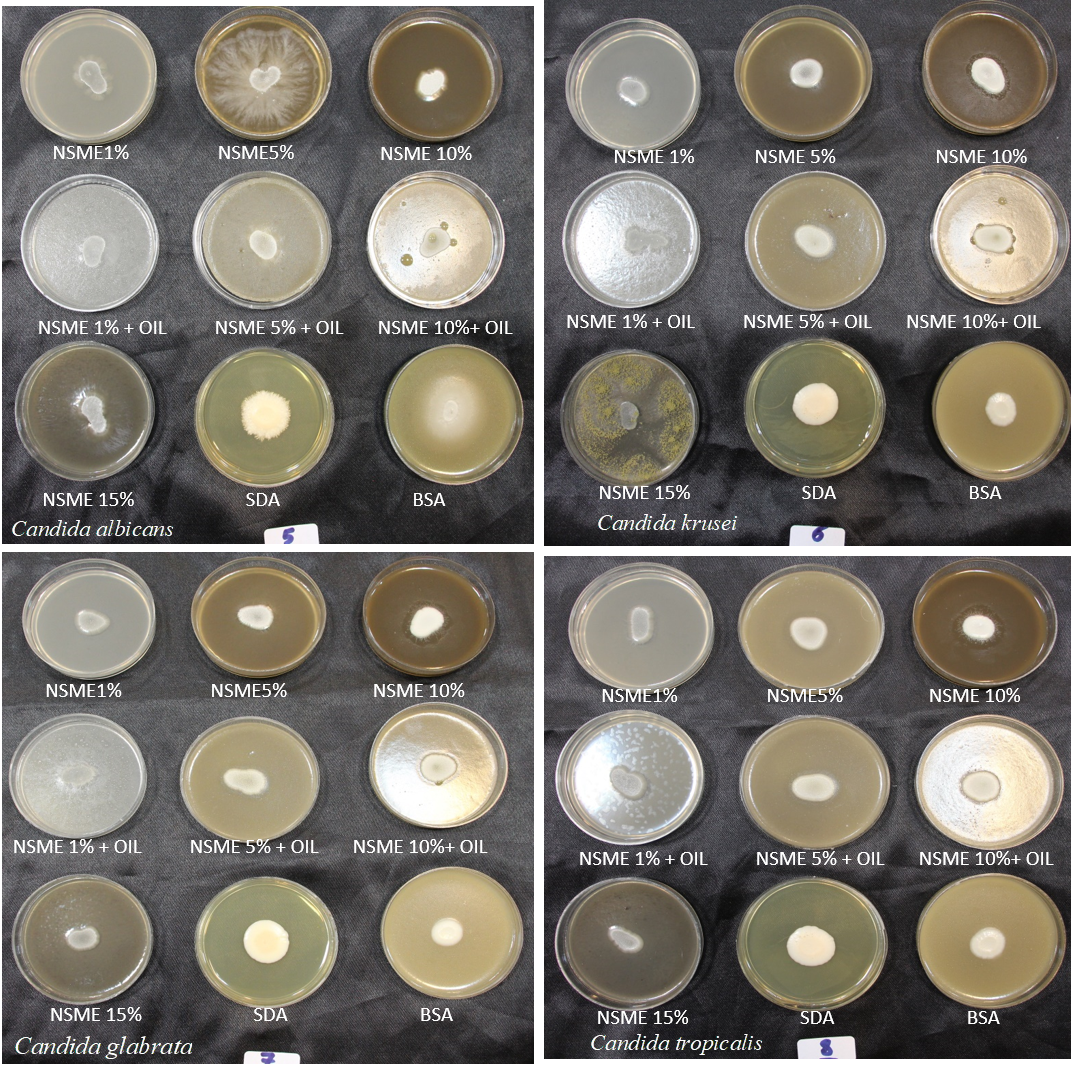
Figure S2. Phenotypic characteristics of yeasts grown on different formulations of Nigella sativa-based media, Sabouraud dextrose agar (SDA), and Bird seed agar (BSA) after 7 days of incubation at 30°C.
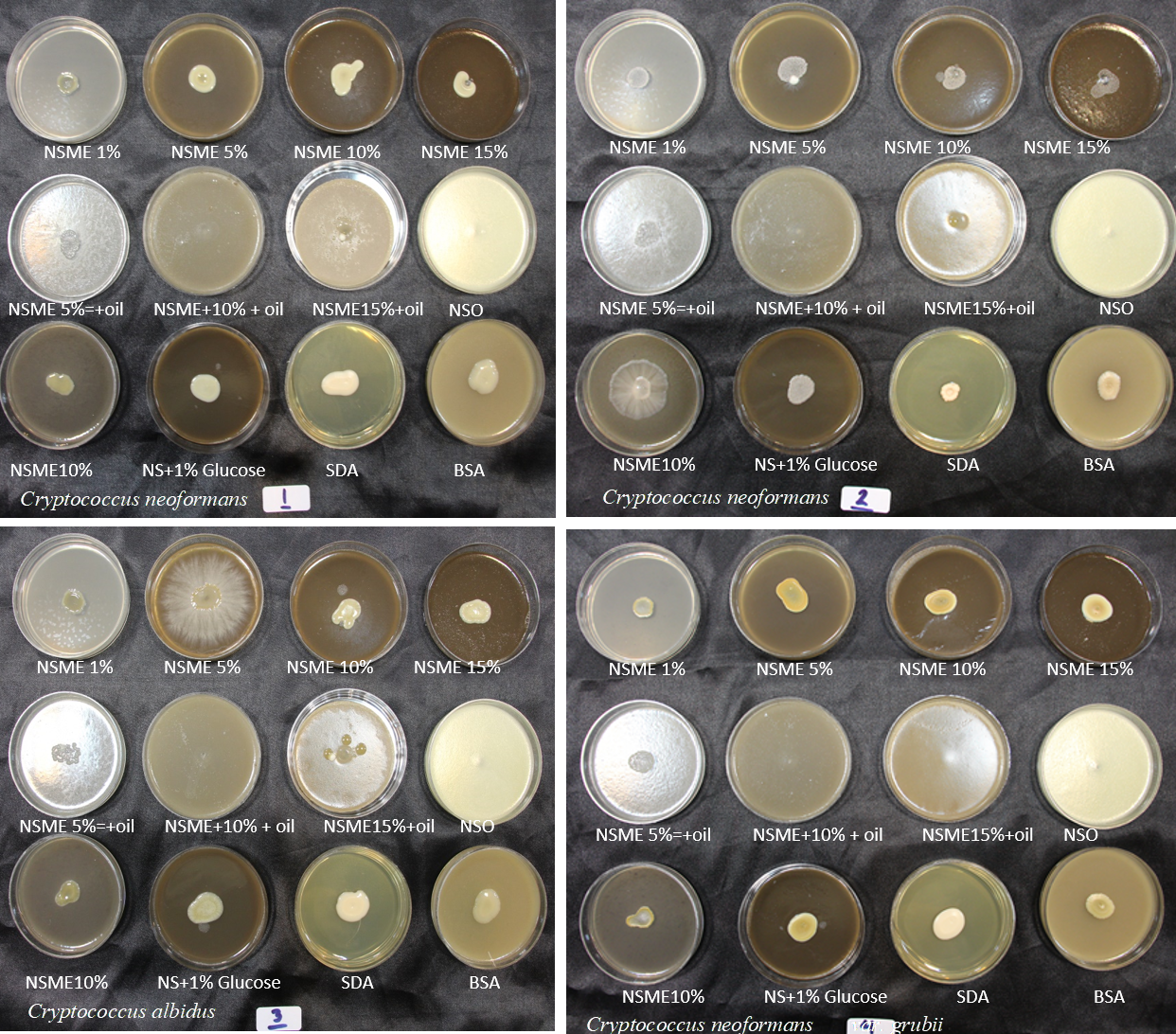
Figure S1. Phenotypic characteristics of yeasts grown on different formulations of Nigella sativa-based media, Sabouraud dextrose agar (SDA), and Bird seed agar (BSA) after 7 days of incubation at 30°C.
Khodadadi, H., Mohammadi Nematabad, G., Rouhi, F., & Khodadadi, E. (2026). Nigella sativa-based agar medium for identifying Cryptococcus neoformans. (e1772). Current Medical Mycology, 12(Continuous), e1772 https://doi.org/10.22034/cmm.2026.345553.1772
MLA
Khodadadi, H., Mohammadi Nematabad, G., Rouhi, F., & Khodadadi, E. "Nigella sativa-based agar medium for identifying Cryptococcus neoformans" .e1772 , Current Medical Mycology, 12, Continuous, 2026, e1772. doi: 10.22034/cmm.2026.345553.1772
HARVARD
Khodadadi H., Mohammadi Nematabad G., Rouhi F., Khodadadi E. (2026). 'Nigella sativa-based agar medium for identifying Cryptococcus neoformans', Current Medical Mycology, 12(Continuous), e1772. doi: 10.22034/cmm.2026.345553.1772
CHICAGO
H. Khodadadi, G. Mohammadi Nematabad, F. Rouhi & E. Khodadadi, "Nigella sativa-based agar medium for identifying Cryptococcus neoformans," Current Medical Mycology, 12 Continuous (2026): e1772, doi: 10.22034/cmm.2026.345553.1772
VANCOUVER
Khodadadi H., Mohammadi Nematabad G., Rouhi F., Khodadadi E. Nigella sativa-based agar medium for identifying Cryptococcus neoformans. Curr. Med. Mycol. 2026;12(Continuous):e1772. doi: 10.22034/cmm.2026.345553.1772